ADVERTISEMENTS
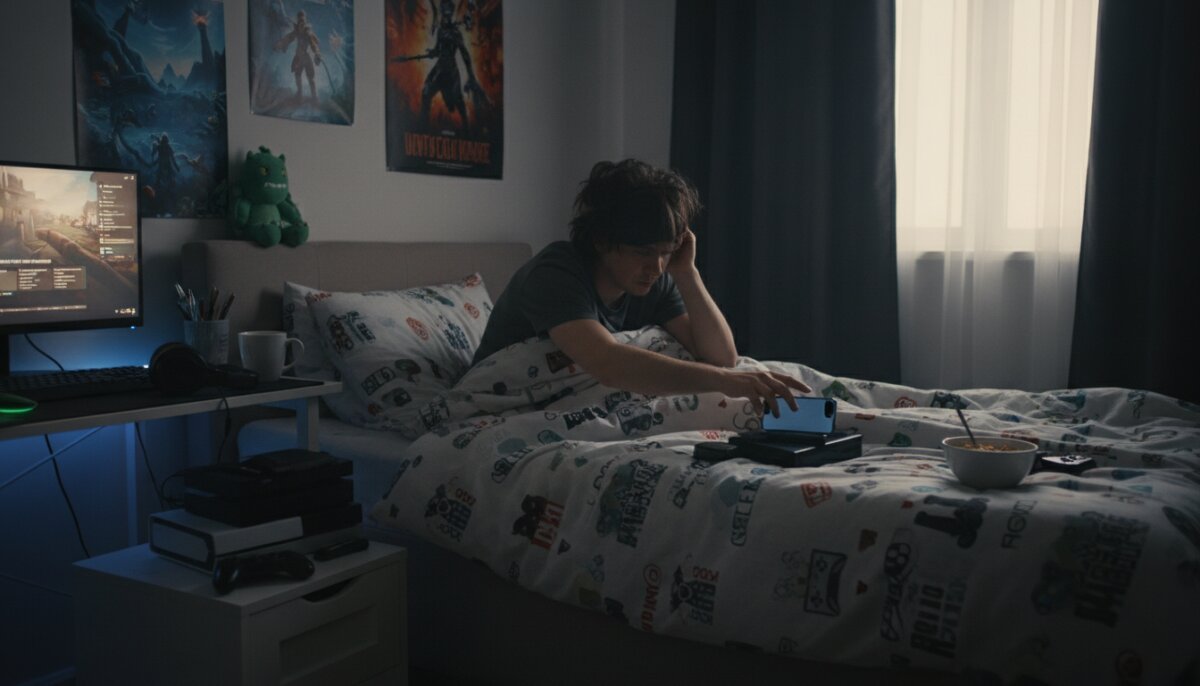
Hey you, the one who spends all day glued to your chair playing games, working, or binge-watching your favorite series! Have you ever stopped to think about what's going on in your body while you're in that position for hours on end? Well, we need to have a serious conversation about this.
ADVERTISEMENTS
Sitting has practically become a modern lifestyle. Between work, gaming, commuting, and leisure time, we spend more time sitting than any previous generation. And our bodies? Well, they definitely weren't designed for it.
Let's find out together what really happens to you when you spend all day sitting down and, more importantly, what you can do to improve this situation. Spoiler alert: it's not pretty, but there's a solution!
Your spine is crying out for help.
You know that annoying little backache that appears at the end of the day? It's not there by chance. When you sit for too long, your spinal column It suffers from absurd pressure, especially in the lumbar region.
ADVERTISEMENTS
Sitting increases pressure on the intervertebral discs by up to 90% compared to standing. It's like putting extra weight on your back without even realizing it. Over time, this can cause herniated discs, chronic problems, and that pain that just won't leave you alone.
Furthermore, the natural tendency is to relax your posture and slouch, which makes everything worse. This forced curvature stretches ligaments and muscles, putting even more pressure where it shouldn't. It's a destructive combination for your spine!
Your muscles are atrophying.
When you sit still in a chair, your muscles literally go into energy-saving mode. core muscles, which are super important for stability and posture, simply shut down when you're sitting down.
The glutes, those buttock muscles that are the largest in the human body, also become inactive. There's even a name for it: dead glute syndrome. Seriously! And it's not just a funny name, it's a real problem that affects your ability to move.
The leg muscles also suffer. Sitting for extended periods causes them to lose strength and endurance. When you finally get up to do some physical activity, you feel completely unprepared. It's your body paying the price for a sedentary lifestyle.
Your Heart Is Not Happy
Here's where things get really serious. Studies show that sitting for more than 8 hours a day significantly increases the risk of... cardiovascular diseases. We're talking about heart attacks, strokes, and other serious heart problems.
When you are sitting, your body burns fewer calories and your metabolism slows down. Blood circulation becomes slower, which can lead to the accumulation of fat in the arteries. It's as if your veins are gradually becoming clogged.
Bad cholesterol (LDL) tends to increase while good cholesterol (HDL) decreases. Blood pressure can rise. All of this together creates a perfect scenario for heart problems in the future. And the worst part is: even those who exercise regularly are not entirely free from these risks if they spend too much time sitting.
Diabetes is knocking at the door.
Sitting directly affects how your body processes sugar. insulin sensitivity Your blood glucose levels drop drastically when you remain still for long periods. This means your body has more difficulty regulating blood glucose levels.
Research indicates that people who sit for long periods have up to a 112% higher risk of developing type 2 diabetes. That's a scary number, isn't it? And it's not enough to just exercise: the amount of time spent sitting is an independent risk factor.
Glucose metabolism gets completely messed up. Even after a healthy meal, your body may have difficulty processing nutrients properly if you've been sitting for hours. It's as if your system goes on strike.
Problems You May Be Experiencing Right Now
- Neck and shoulder pain: that tension that never seems to go away, caused by the hunched posture while looking at the screen.
- Varicose veins and swelling in the legs: Poor circulation causes blood to pool in the legs, resulting in that heavy feeling.
- Carpal tunnel syndrome: Pain and tingling in the hands and wrists, especially if you use the mouse and keyboard a lot.
- Constant fatigue: Even without physical exertion, you feel tired all the time.
- Digestive problems: Compression of the abdominal organs hinders digestion and can cause constipation.
- Frequent headaches: caused by muscle tension in the neck and poor posture
- Weight gain: A slow metabolism and reduced calorie burning facilitate the accumulation of fat.
The Brain Suffers Too
Did you know that sitting too much can even affect your mental health And what about cognitive ability? That's right, a sedentary lifestyle doesn't just affect the physical body. Lack of movement reduces blood flow to the brain, which can impair concentration and memory.
Studies link excessive sitting time to higher rates of anxiety and depression. This makes sense when you consider that movement releases endorphins, those hormones that improve mood. No movement, no endorphins, no joy.
Creativity and productivity also suffer. That creative block you feel after hours in front of the computer? Part of it comes from a lack of movement. The brain needs you to move to function at its maximum capacity.
Your Hips Get Locked
You hip flexor muscles They become shortened when you spend a lot of time sitting. It's as if they get used to that position and no longer want to stretch properly. This causes a cascade of postural problems.
When you finally stand up, these shortened muscles pull your pelvis forward, causing that "protruding belly" posture. This further strains the lower back and can cause pain that radiates down the legs.
Hip mobility decreases significantly. Simple movements like squatting, climbing stairs, or even tying your shoes become more difficult. Your body literally forgets how to move naturally and efficiently.
Life expectancy decreases.
Here's a startling fact: studies show that people who sit for more than 6 hours a day have a mortality rate Up to 40% higher compared to those who spend less than 3 hours. It's a number that makes us rethink our habits, right?
Sedentary lifestyle is considered one of the biggest public health problems of the 21st century. It kills more people than smoking in some countries. And we don't even realize it because the effects are silent, cumulative, and only appear later in life.
Each additional hour spent sitting after the first 8 hours further increases the risks. It's as if you're taking minutes off your life with every moment you spend sitting still in a chair. Scary, but that's the reality according to scientific data.
How to Reverse This Situation
Okay, I've scared you enough. Now let's get down to business: What can I do to improve?The good news is that small changes can make a huge difference to your health. You don't need to become an athlete overnight.
The golden rule is: get up every 30 minutes. Even if it's just for a quick walk, to get some water, or to stretch your legs. These micro-intervals break the destructive cycle of prolonged sedentary behavior.
Invest in a ergonomic chair Seriously. It doesn't need to be that super office-style chair, but something that provides adequate lumbar support and allows for height adjustment. Your feet should touch the ground completely and your arms should be at a 90-degree angle.
Simple Exercises to Do During Break Time
Neck stretch: Tilt your head to each side, holding for 15 seconds. This relieves tension that accumulates during the day. Also, make gentle circular movements, but without forcing it.
Shoulder rotation: Make circles with your shoulders, moving them forward and backward. This helps to loosen the area and improves circulation. Combine this with opening your arms wide, as if you were going to give a giant hug.
Squats: Do 10 squats every hour. They don't need to be deep; just the movement of sitting down and standing up from a chair without using your hands already helps a lot. It activates the glutes and legs that have been dormant.
Adjustments to the Environment
Position the monitor at eye level. You shouldn't need to look down or up. The screen should be within arm's reach. This prevents that persistent neck pain.
Use a footrest if necessary. Your feet should be fully supported, not dangling in the air. This improves circulation and reduces pressure on your thighs. A simple stool will do the trick.
Consider a adjustable table that allows you to work standing up for periods of time. You don't need to stand all day, but alternating between sitting and standing does wonders for your health. There are affordable models on the market.
The Importance of Regular Physical Activity
Even when taking breaks during the day, you still need to regular physical exercise. Ideally, you should aim for at least 150 minutes of moderate-intensity activity per week. This could be walking, running, swimming, dancing, whatever you prefer.
Exercise not only compensates for time spent sitting, but it also strengthens muscles, improves posture, and increases your stamina. You'll notice it becomes easier to maintain good posture throughout the day when you're stronger.
Weight training is especially important for strengthening the core and back. Strong muscles provide better spinal support and prevent injuries. You don't need to become a bodybuilder, but some basic exercises already make a difference.
Warning Signs You Shouldn't Ignore
Persistent pain that doesn't improve with rest is a red flag. If your back, neck, or any other part of your body hurts constantly, see a doctor. Don't let it become chronic thinking it will go away on its own.
Tingling or numbness in the hands, arms, or legs may indicate nerve compression. This is serious and requires professional evaluation. It is not normal to frequently experience body parts "falling asleep.".
Difficulty breathing deeply or chest pain should never be ignored. They can be signs of cardiovascular problems that have developed over time. Prevention is better than cure.
Conclusion: Small Changes, Big Results
Look, I know all this stuff we've talked about sounds scary. But the idea isn't to scare you, but rather... conscious Identify the risks so you can take action. And the best part? It's not difficult to make changes that actually work.
Start slowly. Set an alarm on your phone to remind you to get up every 30 minutes. Do some simple stretches. Adjust your chair and desk. These small actions will make you feel better in just a few days.
Your body was made to move. It appreciates every time you stand up, stretch, walk, or exercise. And best of all: you'll notice the difference not only in your physical health, but also in your mood, energy, and productivity. Taking care of yourself is definitely worth it!